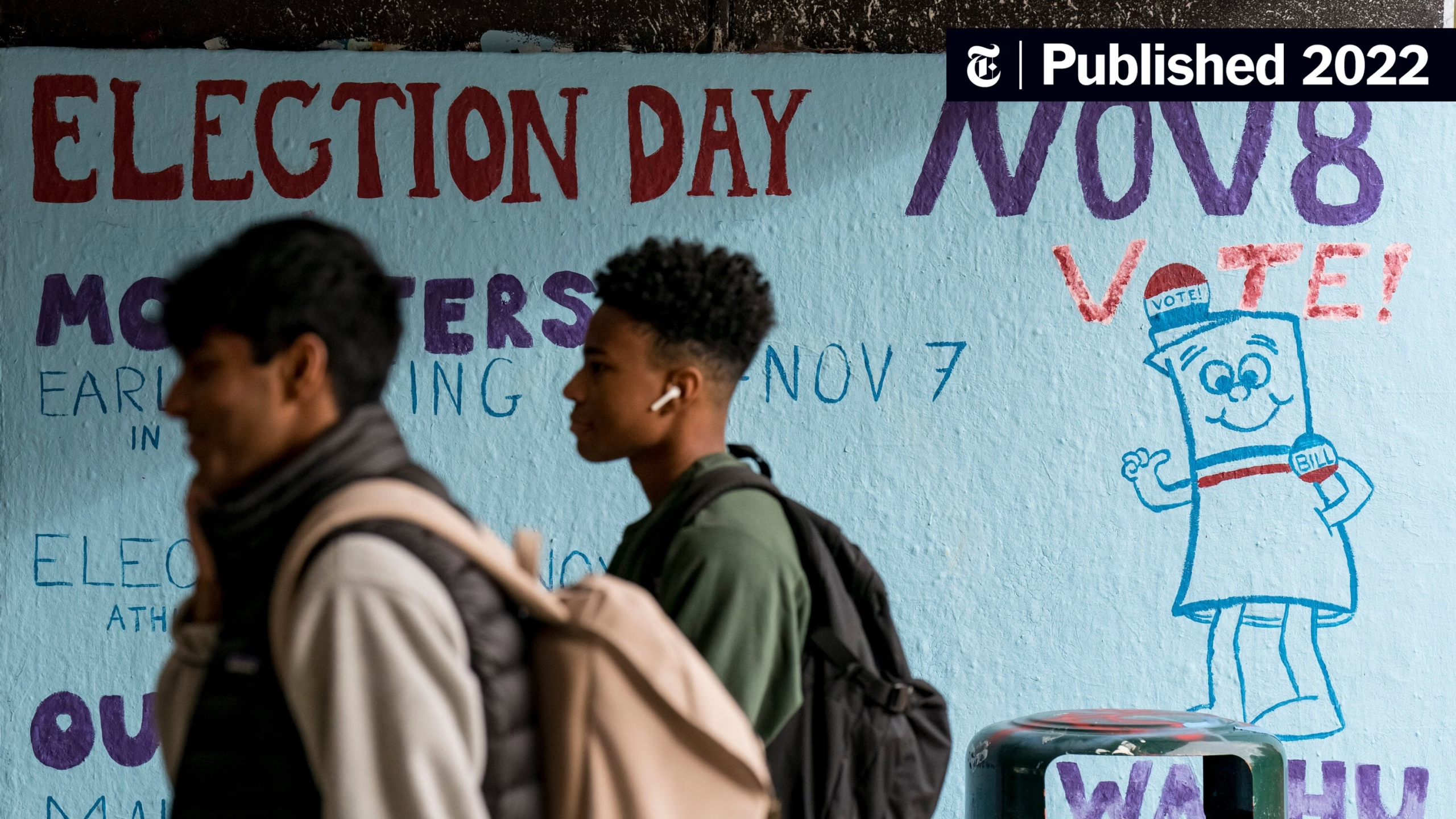
Across the world, young people are no longer silent observers of politics—they are becoming powerful drivers of political change. From climate movements and digital activism to election campaigns and grassroots organizing, youth voters are reshaping modern democracies in ways never seen before. Once viewed as politically disengaged, today’s youth are proving to be one of the most influential demographic groups in democratic systems.
This generational shift is not just about age—it’s about mindset, values, technology, and a new understanding of civic responsibility. Young voters are redefining what participation, leadership, and democracy look like in the 21st century.

The Rise of Political Awareness Among Youth
Young people today grow up in a world of constant information. Social media, digital news platforms, podcasts, and independent journalism expose them to global issues from an early age. Topics like climate change, economic inequality, social justice, human rights, mental health, and education are no longer abstract concepts—they are lived realities.
This exposure has created a generation that is:
- More politically aware
- More globally connected
- More socially conscious
- More vocal about injustice
- More engaged in public discourse
Youth are no longer waiting for traditional political institutions to guide them—they are forming their own opinions and movements.
From Passive Citizens to Active Participants
Previous generations often engaged in politics mainly through voting. Today’s youth engage through:
- Digital activism
- Online campaigns
- Awareness movements
- Student organizations
- Community volunteering
- Grassroots protests
- Social media advocacy
Democracy is no longer limited to election day. It is now a daily digital conversation where youth voices shape narratives, influence public opinion, and pressure institutions.
Technology as a Political Tool
Technology has transformed youth participation in democracy. Platforms like social media allow young voters to:
- Share information instantly
- Organize movements quickly
- Mobilize communities
- Expose corruption
- Demand accountability
- Challenge misinformation
A single post can reach millions. A single hashtag can spark national conversations. Political power has shifted from institutions to individuals, and youth are mastering this digital influence.

Value-Based Voting Over Party Loyalty
Modern youth voters are less loyal to political parties and more loyal to values. Instead of voting based on tradition, identity, or family influence, they focus on:
- Climate policies
- Employment opportunities
- Education reforms
- Healthcare access
- Social equality
- Digital freedom
- Transparency in governance
This shift is forcing political parties to change their strategies. Policies now matter more than personalities.
Redefining Leadership and Representation
Youth voters are also changing what leadership looks like. They demand leaders who are:
- Transparent
- Accountable
- Emotionally intelligent
- Socially responsible
- Environmentally conscious
- Digitally aware
- Inclusive
Traditional authoritarian leadership models are losing relevance. Modern democracy is moving toward participatory leadership, where citizens expect dialogue, not dominance.
The Global Youth Political Movement
Youth political influence is not limited to one country. It is global. From climate marches to democracy protests, young people across continents are organizing for:
- Environmental justice
- Gender equality
- Economic opportunity
- Freedom of speech
- Education reform
- Digital rights
This has created a global youth political identity that transcends borders, cultures, and languages.
Challenges Facing Youth Political Engagement
Despite their influence, youth voters face obstacles:
- Political misinformation
- Online manipulation
- Propaganda
- Polarization
- Digital echo chambers
- Political exploitation
Without proper political education, young voters can become emotionally driven instead of informed. The challenge is to transform passion into responsible participation.
Education as the Foundation of Strong Democracies
For a youth-driven democracy to succeed, education is essential. Civic education must include:
- Critical thinking
- Media literacy
- Political awareness
- Ethical leadership
- Digital responsibility
- Democratic values
An informed youth population strengthens democratic systems and prevents manipulation.
Youth as Guardians of Democracy
Young voters are becoming protectors of democratic values. They challenge corruption, demand accountability, question authority, and fight injustice. This makes democracy more dynamic, transparent, and responsive.
They are not just shaping elections—they are shaping political culture.
Long-Term Impact on Democratic Systems
As youth influence grows, democracies will evolve into:
- More participatory systems
- More transparent governance
- More inclusive policies
- More digital engagement
- More citizen-led initiatives
- More accountability-driven leadership
Democracy is shifting from elite control to citizen participation.
Final Thoughts
Youth voters are not the future of democracy—they are the present of democracy. Their energy, awareness, courage, and digital power are transforming political systems across the world. They are redefining citizenship, leadership, and participation.
Modern democracy is no longer built only in parliaments and government offices.
It is built on smartphones, in classrooms, on social platforms, and in communities.
When young people engage, democracy evolves.
When youth participate, democracy strengthens.
When youth lead, democracy transforms.
The voice of youth is no longer rising.
It is already reshaping the world