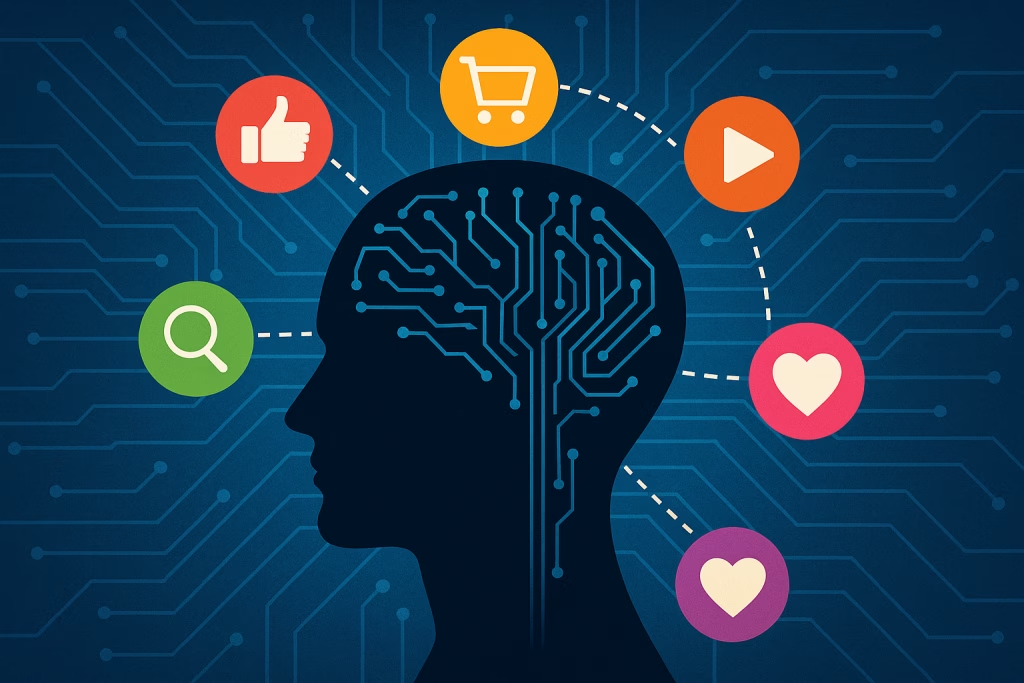
In the digital age, algorithms silently shape almost every part of our lives. From the videos you watch and the news you read to the products you buy and the opinions you form, invisible systems are constantly guiding your choices. You may believe you are in control of your decisions—but in reality, algorithms influence what you think, buy, and believe more than you realize.
Social media platforms, search engines, e-commerce websites, and streaming services all use algorithms designed to predict your behavior. Their goal is simple: keep you engaged, scrolling, and consuming. Over time, this digital influence doesn’t just affect your habits—it reshapes your thinking patterns, beliefs, and worldview.
What Are Algorithms Really Doing?
Algorithms are automated systems that analyze your behavior:
- What you like
- What you search
- What you watch
- What you share
- What you ignore
- How long do you stay on content
- What do you comment on
Using this data, they predict what will keep your attention the longest. This creates a personalized digital reality where your online world is designed specifically for your emotions, interests, fears, and desires.
The Illusion of Choice
Most people believe they freely choose what they consume online. In reality, algorithms choose what you see first, what gets repeated, and what disappears. You are not seeing the internet—you are seeing a filtered version of it.
This creates:
- Controlled information exposure
- Biased content flow
- Limited perspectives
- Repetitive narratives
- Selective truth consumption
Your digital environment becomes a psychological bubble rather than a neutral space.
How Algorithms Shape Your Thinking
Repeated exposure creates belief. When you see the same ideas again and again, your brain begins to accept them as truth—even if they are biased, incomplete, or misleading.
Algorithms influence thinking by:
- Repeating certain viewpoints
- Suppressing opposing views
- Amplifying emotional content
- Promoting sensationalism
- Rewarding outrage-driven narratives
- Encouraging polarizing opinions
Over time, this reshapes how you interpret reality.

How Algorithms Influence Your Beliefs
Beliefs are built through repetition and reinforcement. Algorithms create echo chambers where users are surrounded by content that confirms their existing views.
This leads to:
- Radicalization of opinions
- Political polarization
- Social division
- Cultural intolerance
- Ideological rigidity
- Loss of critical thinking
People stop questioning information because it feels familiar and validated.
How Algorithms Control Consumer Behavior
Digital platforms are not just influencing ideas—they are shaping spending habits. Every scroll, click, and search feeds data into predictive models that control advertising exposure.
Algorithms influence buying behavior by:
- Showing personalized ads
- Triggering emotional desires
- Creating artificial needs
- Encouraging impulse buying
- Using scarcity psychology
- Building brand familiarity
- Exploiting fear of missing out (FOMO)
Many purchases today are algorithm-triggered rather than need-based.
Emotional Manipulation and Engagement Design
Algorithms prioritize emotional content because emotion increases engagement. Anger, fear, excitement, desire, envy, and outrage generate more interaction than calm logic.
This creates a digital environment where:
- Drama is rewarded
- Extremes are promoted
- Calm voices are ignored
- Balanced views disappear
- Sensationalism dominates
- Reality becomes distorted
Emotion becomes the currency of visibility.
The Mental Health Impact
Constant algorithmic exposure affects mental health:
- Increased anxiety
- Comparison pressure
- Self-esteem issues
- Attention disorders
- Dopamine addiction
- Digital fatigue
- Emotional burnout
People are no longer just users—they become data subjects inside attention economies.
The Loss of Independent Thinking
When content is curated for you, curiosity declines. Exploration reduces. Independent discovery disappears. Critical thinking weakens.
People begin to:
- Accept information passively
- Trust trending content
- Follow digital crowds
- Fear social rejection
- Avoid opposing views
- Lose intellectual independence
Algorithms don’t just shape content—they shape cognition.
Digital Identity Engineering
Over time, algorithms build a digital version of you:
- Your interests
- Your fears
- Your desires
- Your political views
- Your spending patterns
- Your emotional triggers
This digital identity is used to predict, influence, and shape your future behavior.
Breaking Free From Algorithmic Control
You don’t have to be controlled by algorithms. Awareness creates freedom.
Practical steps:
- Follow diverse perspectives
- Question viral content
- Limit screen time
- Avoid emotional reaction content
- Read long-form content
- Verify information
- Control notifications
- Use intentional consumption
- Think before sharing
- Practice digital minimalism
Conscious consumption weakens algorithmic control.
Human Choice vs Machine Influence
Algorithms are not evil—but they are not neutral. They are designed for profit, engagement, and influence, not truth, wisdom, or well-being.
Without awareness:
- Thought becomes programmed
- Belief becomes engineered
- Desire becomes manufactured
- Identity becomes shaped
- Reality becomes filtered
Final Thoughts
We live in an age where code influences consciousness. Algorithms shape perception, behavior, emotion, belief, and decision-making. They do not control us directly—but they guide the environment that shapes us.
Freedom in the digital age is not about deleting apps.
It’s about digital awareness.
It’s about conscious consumption.
It’s about critical thinking.
It’s about mental independence.
You don’t have to fight algorithms.
You just have to understand them.
Because the moment you become aware of influence,
you regain control of your mind.
In a world of digital manipulation,
awareness is the new freedom.